
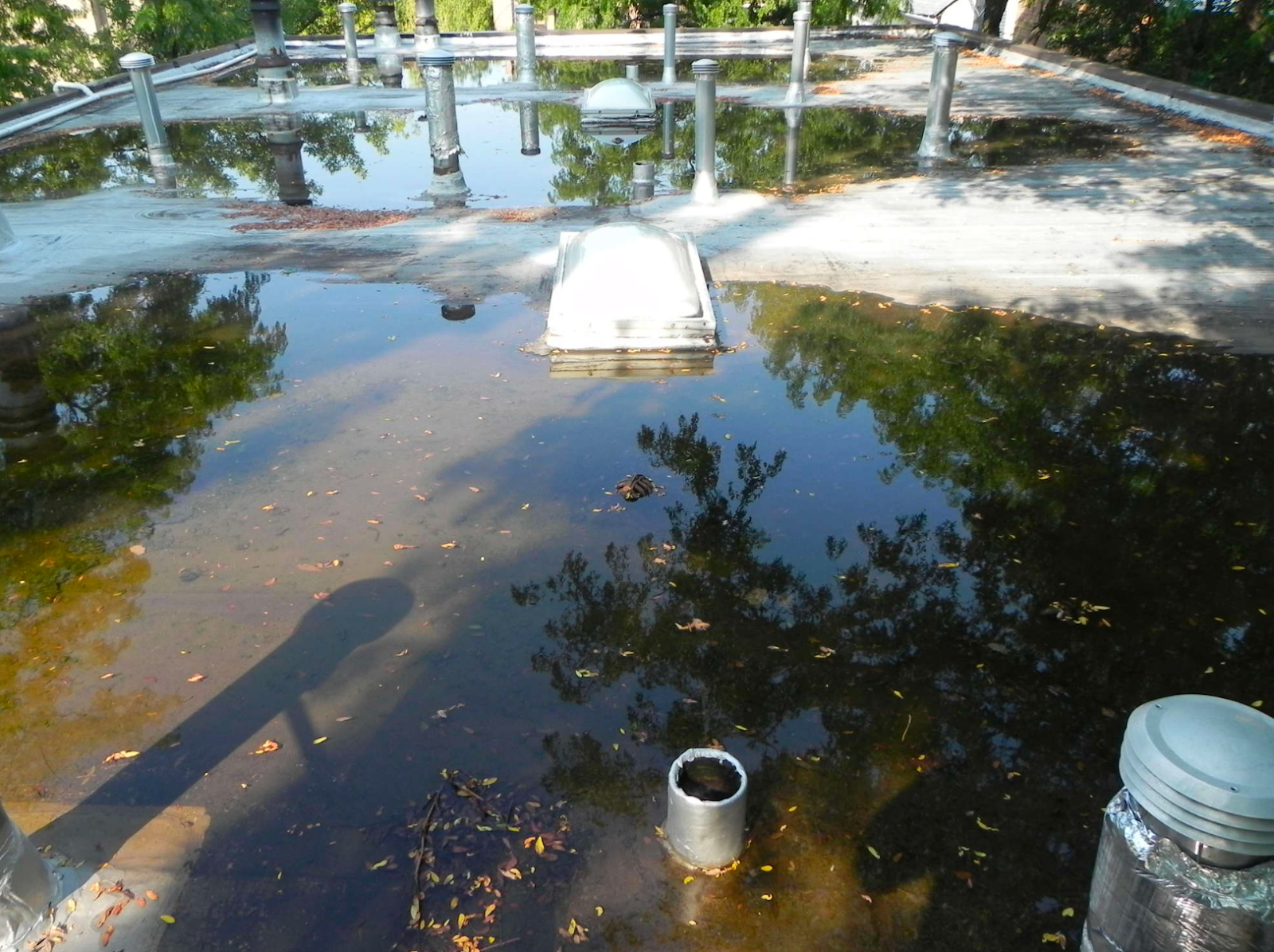
Common Design and Drainage Issues
Most commercial roofs are not designed to be perfectly flat but poor design or inadequate slope can cause areas where water collects. Blocked or undersized drains, scuppers, and internal drainage systems can also create ponding zones.
Impact of Freeze-Thaw Cycles in Ohio and the Midwest
In places like Dayton and across the Midwest, temperature swings during winter create repeated freeze-thaw cycles. Water that ponds can freeze, expand, and stress the membrane or seams. Over time, this contributes to cracking and internal water infiltration.
Aging Roof Membranes and Settling Insulation
As roof systems age, insulation can compress and create dips. These low spots turn into water traps. The older the roof, the more likely these sagging areas will appear, especially if the building has been through structural shifts or renovations.
Poor Installation or Repairs
Incorrectly installed roof systems, patchwork repairs, or mismatched materials can all cause uneven surfaces. Even minor miscalculations in slope or insulation height can create long-term water problems.
How Long Can Water Sit On A Commercial Roof?
The 48-Hour Drainage Rule
According to most manufacturers and roofing standards, water should not remain on the roof surface more than 48 hours after precipitation. Beyond that, it’s considered ponding and can void warranties.
When Does It Become a Problem?
If water remains longer than 48 hours, especially repeatedly, it starts accelerating damage. Even in small amounts, the constant exposure contributes to material breakdown, biological growth, and hidden leaks.
What Risks Does Ponding Water Create?
Accelerated Roof Membrane Deterioration
Continuous moisture exposure weakens the membrane. UV rays can’t dry it out. Over time, seams break down, coatings wear off, and blistering begins.
Leaks and Interior Water Intrusion
Water doesn’t just stay on the surface. It finds its way into seams, penetrations, and any area with compromised adhesion. This leads to ceiling stains, wall damage, and mold growth inside the building.
Structural Load and Safety Concerns
Water is heavy, roughly 5 pounds per square foot per inch of depth. When ponding water accumulates over time, it adds weight to your structure, increasing stress on joists and decking. In severe cases, it can even lead to collapse.
Mold, Algae, and Roof Surface Contamination
Standing water promotes microbial growth. Algae and mold aren’t just unsightly, they break down roofing materials and create slippery surfaces, which pose hazards during maintenance.
Voided Warranties and Insurance Issues
If ponding water is present and not addressed, many manufacturers will consider it a maintenance failure and void roof warranties. Insurance companies may deny claims tied to roof neglect.
How To Identify Ponding Water Early
Visible Water After 48 Hours of Dry Weather
This is the simplest check. If you see puddles on the roof a few days after rain, it’s time to take a closer look.
Staining or Dirt Rings
Look for dark rings or stains around low spots. These are telltale signs where water has repeatedly pooled and evaporated, leaving debris behind.
Deformed Roof Membranes and Bubbling
Soft spots, air bubbles, or warped surfaces often indicate trapped moisture or weakening below the membrane.
Inconsistent Drainage Patterns
Drains should draw water evenly. If you notice dry areas next to puddles, or areas where water isn’t flowing at all, drainage may be blocked or insufficient.
Infrared and Moisture Scanning
For larger roofs or suspected hidden issues, thermal imaging or electronic moisture detection tools can locate ponding-related water intrusion inside the roofing assembly.
Solutions For Ponding Water On Commercial Roofs
Improving Roof Drainage Systems
Ensure existing drains are clear and appropriately placed. Adding new drains or scuppers can help manage larger volumes of water, especially during Ohio’s heavy spring storms.
Tapered Insulation Add-Ons
Tapered insulation can be added during repairs or restoration to correct slope deficiencies. This method is especially effective on aging roofs with compressed areas.
Roof Coatings and Slope Corrective Coatings
Silicone and fluid-applied coatings can fill low spots and re-establish slope. These are not DIY fixes, they must be professionally applied and evaluated for proper adhesion and depth.
Restoration vs. Replacement Considerations
Not all ponding issues require full roof replacement. If the membrane is in fair condition, a restoration system can extend its life. But if structural damage is evident, a full tear-off may be the only viable long-term solution.
Ongoing Roof Maintenance and Inspection Plans
Routine inspection and maintenance is the most cost-effective way to manage ponding risks. Catching small issues before they become expensive repairs can save thousands over the life of your roof.
Why This Matters in Dayton and Midwest Commercial Roofs
Climate Stress and Seasonal Water Intrusion
The Midwest sees snow, rain, wind, ice, and sun, often in the same week. These fluctuations put more pressure on roofing systems than in milder climates. Ponding water becomes a gateway to year-round roof stress.
The Role of Building Use and Occupant Impact
Facilities with HVAC units, heavy foot traffic, or sensitive inventory are more vulnerable to ponding water consequences. Water intrusion can halt operations, damage goods, or create safety violations.
Long-Term Roof Asset Planning
Commercial roofs are capital assets. Addressing ponding water early preserves asset value, reduces lifecycle costs, and protects your bottom line. Planning for restoration, rather than emergency replacement, offers more control and less disruption.
When To Call a Commercial Roofing Expert
Signs You Shouldn’t Ignore
If you notice recurring puddles, stained ceiling tiles, blocked drains, or bubbling membranes, it’s time for a professional evaluation. Don’t wait until it leaks into your tenant’s office or production floor.
The Value of a Professional Roof Evaluation
An experienced commercial roofing expert can identify causes, map out effective solutions, and help you decide whether restoration or replacement is best. Every building is different and your roof system deserves a customized plan.
Conclusion: Protect Your Roof Investment
Ponding water isn’t just a nuisance; it’s a red flag. Left alone, it can lead to costly repairs, operational downtime, and premature roof failure. But with early identification and targeted solutions, most ponding issues can be resolved without a full roof replacement.
At Monolithic Roofing, we specialize in diagnosing and solving ponding water issues on commercial roofs throughout Dayton, Ohio and the Midwest. If you manage or own a commercial facility, let’s protect your investment before small problems turn into big ones.
Contact us today for a professional evaluation or consultation.
FAQs
1. Is ponding water always a sign of roof failure?
Not always, but it’s a warning sign. If left unchecked, it can lead to failure. Early intervention is key.
2. Can roof coatings alone fix ponding water?
Sometimes. High-build coatings can help in mild cases, but coatings are not a cure-all. Proper drainage correction is usually required.
3. What is the most cost-effective solution?
Improving drainage or using tapered insulation to correct low spots is often the most effective way to prevent future damage.
4. How often should a commercial roof be inspected for ponding?
At least twice per year—ideally in spring and fall. After any major storm or snowmelt event, a check-up is also recommended.
5. Does ponding water affect energy efficiency?
Yes. Standing water can degrade reflective surfaces and contribute to heat absorption, increasing cooling costs.

Comments are closed