
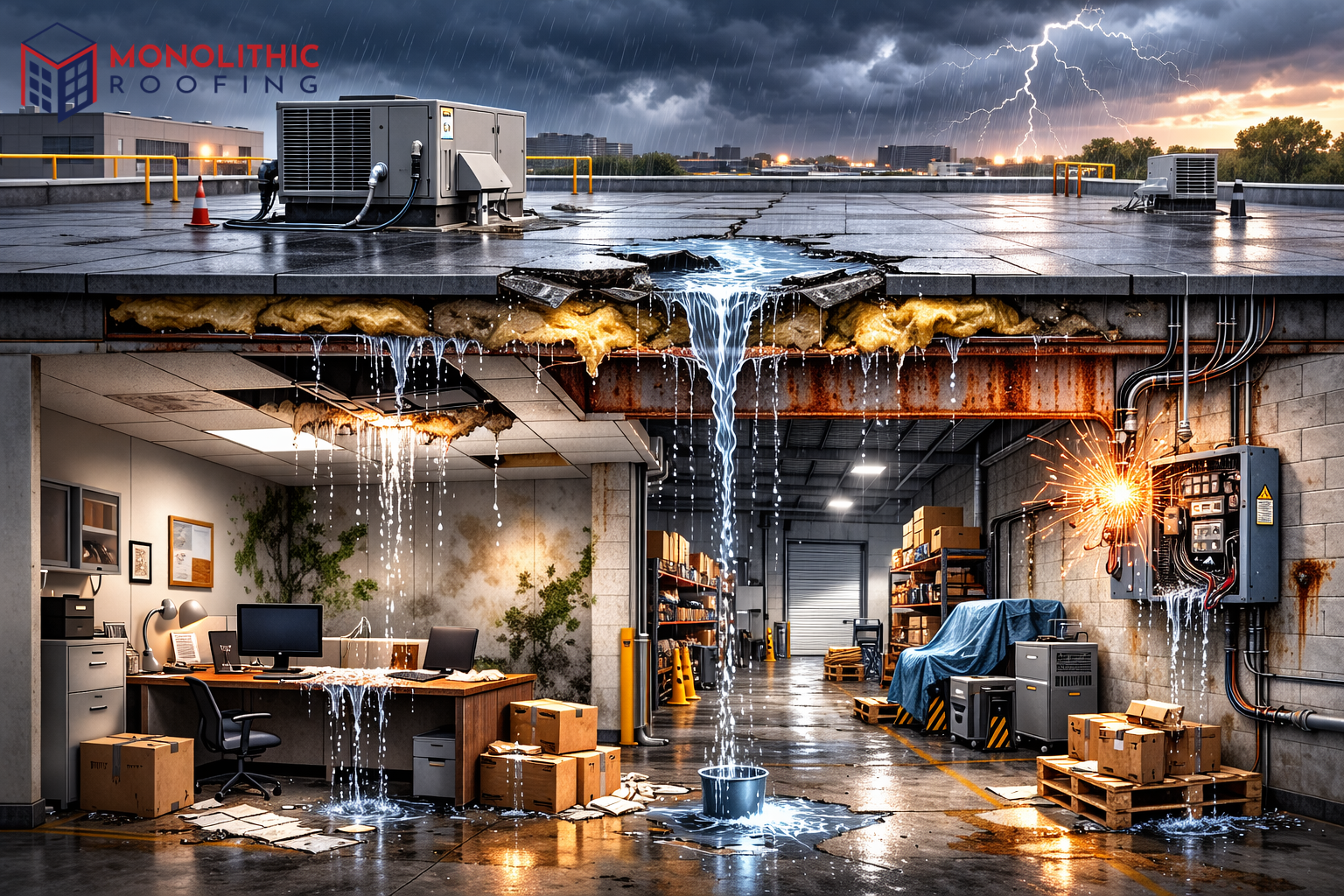
Ignoring a roof leak in a commercial building almost always leads to more damage, higher costs, and unexpected downtime. What starts as a small drip can quickly lead to soaked insulation, structural deterioration, and mold growth.
For commercial property owners and facility managers in places like Dayton, Ohio, where weather shifts are intense and flat roof systems are common, even minor leaks can become serious liabilities fast.
Why Even Small Commercial Roof Leaks Should Never Be Ignored
Leaks Rarely Stay Small
Moisture entering the roof system spreads laterally. A pinhole today can create a wide area of wet insulation by next month.
Moisture Travels Farther Than You Think
Water can move across vapor barriers, saturate insulation, and travel dozens of feet from the point of entry before becoming visible inside the building.
Hidden Damage Gets Expensive Fast
By the time leaks show up on the ceiling or walls, they’ve likely already damaged materials underneath the roof membrane.
Immediate Risks of Ignoring a Commercial Roof Leak
Damage to Insulation and Roof Membrane
Wet insulation loses its R value and adds unnecessary weight. Prolonged exposure causes membranes to delaminate or blister.
Electrical Hazards
Roof leaks that reach ceiling-mounted electrical systems create real safety risks including fire hazards and equipment failure.
Equipment and Inventory Loss
If your facility includes manufacturing lines, sensitive electronics, or inventory storage, water intrusion can halt operations and destroy product.
Long Term Consequences of Unaddressed Leaks
Structural Deterioration
Persistent moisture accelerates rusting of steel deck panels, rotting of wood, and corrosion of fasteners and anchors.
Mold Growth and Indoor Air Quality Concerns
Damp environments are a breeding ground for mold. Once mold spreads into HVAC systems or drywall, remediation becomes expensive and disruptive.
Code Violations and Safety Issues
Water damage can cause compliance issues with fire ratings, insulation performance, and interior finish requirements.
Increased Insurance Claims and Premiums
More claims and larger losses often result in higher premiums, deductibles, or even policy non renewal.
How Leaks Impact Flat and Low Slope Roof Systems
Water Intrusion into Insulation Layers
Flat roofs are vulnerable because water can pond and seep into insulation, especially at seams and penetrations.
Damage Under the Membrane is Often Hidden
Until a professional inspection is done, it’s difficult to see how far moisture has spread below the surface.
Freeze Thaw Cycles Worsen Water Damage
In Midwest climates, trapped moisture freezes and expands, separating materials and creating cracks.
Signs of a Commercial Roof Leak That May Go Unnoticed
- Water stains on ceilings or upper walls
- Musty or moldy smell in certain areas
- Unexpected spikes in HVAC usage
- Blisters, bubbles, or soft spots on the roof surface
- Pooling water near drains or rooftop units
These subtle signs often go overlooked until damage becomes more severe.
The Hidden Cost of Waiting to Fix a Roof Leak
Emergency Repairs are Always More Costly
When a leak turns into a crisis, you’re paying premium rates for labor, materials, and cleanup.
Disruption to Business Operations
Leaks can lead to interior damage, production delays, or even tenant complaints in leased commercial spaces.
Asset Depreciation and Reduced Property Value
Persistent water issues lower the value of the property and may complicate refinancing or resale efforts.
How Ohio and Midwest Weather Makes Leaks Worse
Snow and Ice Drive Water into Vulnerable Seams
Ice damming and freeze expansion force water into cracks and fastener points on flat and low slope roofs.
Spring Storms and Wind Events Compound Damage
High winds lift loose seams and carry debris that damages membranes.
Ponding Water Becomes a Breeding Ground for Leaks
Poor drainage leads to standing water, especially in older roof systems that have settled unevenly.
Real World Examples from Commercial Roofs in Ohio
A Retail Building in Dayton
Ignored leaks over three years led to saturated insulation, interior ceiling collapse, and an eventual tear off that cost four times more than early intervention.
An Industrial Facility in Columbus
A small puncture near a rooftop unit led to rusting of a steel deck panel and required partial structural replacement.
A School District Roof with Repeated Delays
Postponed maintenance resulted in mold issues that forced classroom closures and costly interior remediation.
What to Do If You Suspect a Leak
Do Not Wait for Visible Damage
If you suspect a leak, act early. Waiting always increases both cost and risk.
Schedule a Leak Investigation with a Commercial Roofing Expert
Professional diagnostics identify the source and extent of the problem, even if it’s not visible from the surface.
Document Everything for Insurance and Planning
Detailed reports help with claims, budgeting, and long term capital management.
How Leak Detection is Performed on Commercial Roofs
Infrared Moisture Scans
These detect temperature variations that signal wet insulation under the membrane.
Core Sampling and Deck Inspections
Taking small sections of the roof confirms moisture levels, deck condition, and insulation integrity.
Sealant and Flashing Evaluations
Critical in identifying leaks around penetrations like HVAC units, drains, or wall transitions.
Repair Options for Commercial Roof Leaks
Localized Repairs
Spot repairs on seams, penetrations, or punctures can be effective if the issue is caught early.
Roof Restoration with Coatings
For aging but functional roofs, coatings can seal the surface and extend the roof’s life by 10 to 20 years.
Full Replacement Only When Necessary
If insulation is saturated or the membrane has failed systemically, a full replacement may be the safest option.
Preventing Future Leaks Through Proactive Maintenance
Scheduled Roof Inspections
At least twice a year, and after major weather events, inspections can identify vulnerabilities early.
Clearing Debris and Drains
Clogged drains and rooftop debris contribute to ponding and localized membrane stress.
Maintaining Warranty Compliance
Most commercial roof warranties require documented inspections and maintenance.
How to Incorporate Leak Management into Capital Planning
Evaluate Remaining Useful Life of the Roof
This helps you decide whether to invest in repairs, restoration, or plan for future replacement.
Budget for Restoration Before Failure
Roof coatings and restoration systems are most cost effective when installed before failure, not after.
Use Leak History to Inform Strategy
Patterns of recurring leaks often point to larger issues and inform decisions on full system upgrades.
Conclusion: A Small Leak Today Can Be a Big Problem Tomorrow
The cost of ignoring a commercial roof leak is never just the cost of the water itself. It’s the damage to insulation, structural components, electrical systems, and the trust of building occupants.
In places like Dayton and across the Midwest, where weather challenges roofs year round, proactive leak detection and repair isn’t just smart, it’s essential. Protecting your roof protects your entire operation.
If you suspect a leak or want to ensure your commercial roof is performing as it should, contact Monolithic Roofing for a professional inspection and honest evaluation.
FAQs About Commercial Roof Leaks
1. How serious is a small leak in a commercial roof?
Even small leaks can damage insulation, create safety hazards, and lead to bigger problems if not addressed.
2. Can commercial roof leaks be repaired without a full replacement?
Yes. Many leaks can be solved with targeted repairs or restoration coatings if caught early.
3. What are the most common causes of commercial roof leaks?
Penetrations, failed seams, ponding water, and aging membranes are common culprits.
4. How often should I inspect my commercial roof?
At least twice per year and after major storms. Regular inspections prevent small issues from growing.
5. Is roof leak damage covered by insurance?
It depends. Insurance may cover sudden events, but damage from neglect or deferred maintenance is often excluded.

Comments are closed