
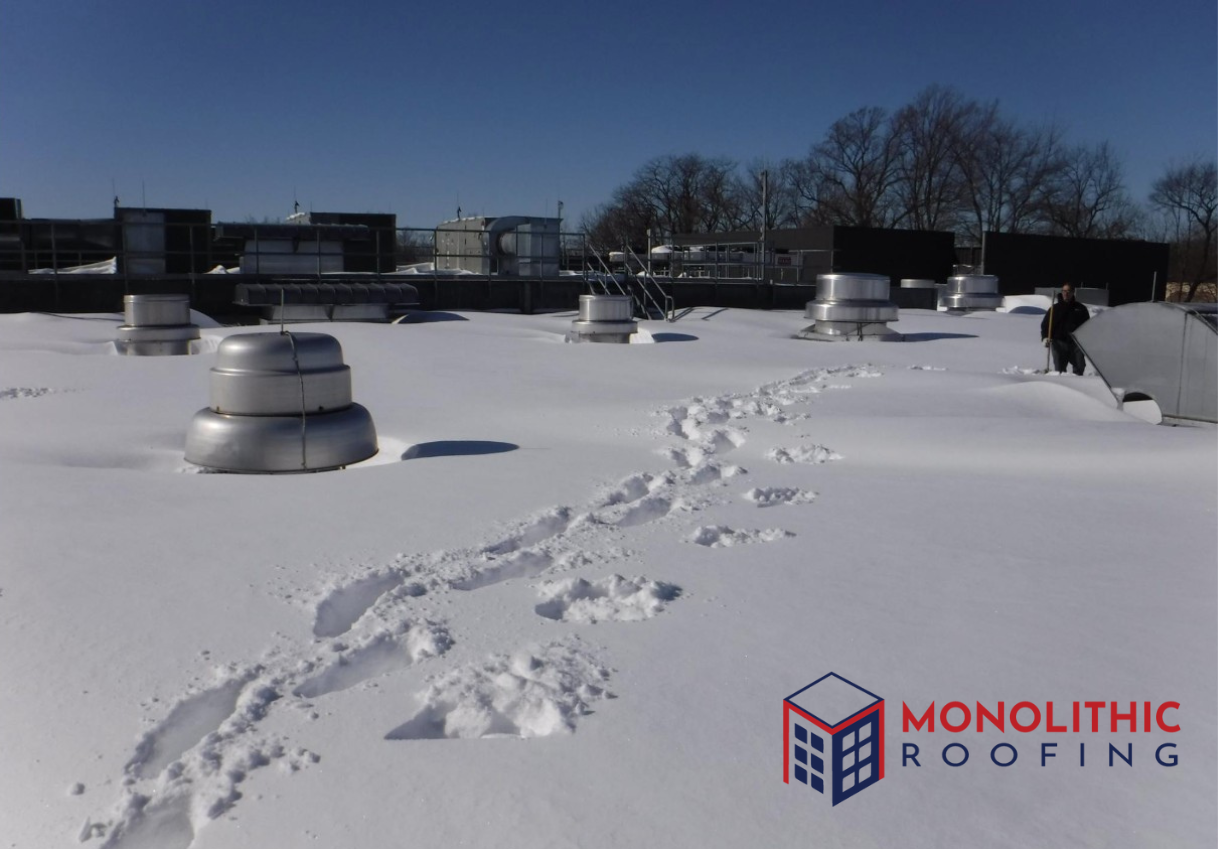
Why Winter Weather is Especially Tough on Flat Commercial Roofs
Flat commercial roofs face unique challenges in winter. Snow, ice, and temperature swings affect these systems differently than pitched roofs.
Flat vs Sloped Roofs in Winter Conditions
Sloped roofs shed snow and ice naturally. Flat roofs don’t. This means snow stays longer, melts slower, and has more time to refreeze. Water doesn’t drain as easily, which sets the stage for more damage.
Common Roofing Materials and Their Cold Weather Performance
Not all commercial roofing materials handle Ohio winters the same.
- EPDM becomes brittle in extreme cold
- TPO may shrink during rapid temperature changes
- PVC seams can crack if aged or stressed
- Modified Bitumen handles freeze-thaw better but still needs attention
Knowing what’s on your roof is the first step in managing winter risk.
Understanding the Freeze-Thaw Cycle and Its Impact on Roof Systems
The freeze-thaw cycle is the silent killer of many commercial roofs, especially in the Midwest.
What is a Freeze-Thaw Cycle?
It’s the process where water freezes overnight and thaws during the day. In Ohio, this can happen dozens of times in a single winter week.
Why Freeze-Thaw is More Severe in the Midwest
Our region gets repeated swings above and below freezing—especially during late winter and early spring. This creates constant stress on roof membranes, flashings, and sealants.
How Expansion and Contraction Lead to Roof Damage
When water seeps into cracks or seams and freezes, it expands. That expansion forces materials apart. Once this process starts, every cycle makes the damage worse, until you’ve got a leak.
Ice Dams on Flat Roofs: Yes, They Happen
Ice dams aren’t just a residential problem. They occur on flat roofs too and they’re often harder to spot.
What Causes Ice Dams on Flat Roofs
Warm air inside the building causes snow to melt unevenly. That melted water travels to colder roof edges, freezes again, and creates a dam that traps even more water.
Hidden Risks of Ice Buildup Around Drains and Parapets
When ice forms around internal drains or at the base of parapet walls, it blocks drainage. The trapped water can’t go anywhere except into your building. This is a common cause of winter roof leaks we investigate.
Ponding Water Becomes a Bigger Threat in Winter
Flat roofs naturally collect water. When temperatures drop, that water turns to ice and that’s when the real problems start.
Why Standing Water Freezes Differently on Flat Roofs
Unlike sloped surfaces, water doesn’t flow away. It sits, freezes, expands, and stresses the roof membrane. Repeated freezing and thawing in the same spot leads to membrane failure and leaks.
The Risk of Freeze-Induced Membrane Splitting
As ice expands, it can actually tear seams apart or stretch flashing. We’ve seen entire sections split open after a single deep freeze following a thaw cycle.
Snow Load and Structural Stress on Commercial Roofs
Weight is another issue. Snow and ice are heavy and your building may not be designed for what winter throws at it.
Snow Load Tolerance Varies by Building Design
Older buildings and those not built with heavy snow in mind are at risk. Structural engineers design roofs for specific snow loads, but excessive or prolonged accumulation can exceed those limits.
How Wet Snow and Ice Add Weight Quickly
Dry snow weighs less. But one inch of wet snow can equal the weight of four inches of dry snow. Ice is even worse. It adds weight fast, especially after rain refreezes on top of snow.
Warning Signs Your Roof is Under Too Much Load
- Doors sticking or frame distortion
- Cracks in interior ceilings or walls
- Noticeable sagging in the roof deck
If you notice these signs, call a commercial roofing expert immediately.
Cold Weather Cracks and Membrane Failures
Material flexibility drops in cold temperatures. For older roofs, this can be a major problem.
Seam Failures in Single-Ply Systems
We often see seam adhesive lose grip in freezing weather. Especially in TPO and EPDM systems past their prime.
Brittleness in Older Roof Systems During Deep Freezes
Older membranes stiffen in cold and crack under stress. Expansion and contraction from rooftop equipment or foot traffic can cause instant splits during a cold snap.
HVAC Curbs, Vents, and Penetrations: The Weakest Links in Winter
Penetrations are natural weak points—and winter makes them worse.
Thermal Movement Around Rooftop Equipment
Metal expands and contracts more than roofing membranes. When curbs or vents shift during freeze-thaw cycles, flashing can fail. We often trace winter leaks back to these areas.
Leaks That Start Small but Escalate Fast
Even a pinhole leak can cause major damage over time, especially if it goes unnoticed during a long winter. Moisture intrusion in freezing temps can lead to trapped water, mold, and insulation damage.
Roof Coatings and Restorations: How They Hold Up to Freeze-Thaw
If properly installed, roof coatings can help protect against winter damage, but timing and materials matter.
Benefits of Elastomeric Coatings in Winter
Elastomeric roof coatings stay flexible in cold weather and handle expansion and contraction well. They create a seamless barrier that resists cracking during freeze-thaw cycles.
When to Apply Coatings to Avoid Cold Weather Failures
Never apply coatings during freezing temperatures. The ideal window is late spring through early fall in Ohio. Coatings applied too late in the year may not cure properly, leading to early failure.
Key Winter Roofing Issues We See in Dayton, Ohio
At Monolithic Roofing, we’ve seen firsthand how Midwest winters hit commercial roofs.
Real-World Examples from Local Commercial Roofs
From split EPDM seams on warehouse roofs to blocked drains causing ice backups in retail buildings, these aren’t rare events. They’re what we deal with every winter across Dayton and surrounding cities.
Why Midwest Weather Creates a Perfect Storm for Roof Damage
Rapid temperature swings. Heavy wet snow. Freezing rain. All in the same week. This unpredictability puts relentless pressure on commercial roof systems.
Preventive Maintenance Before and During Winter
The best time to protect your roof from winter is before winter starts.
Why Fall Inspections Matter
A detailed fall inspection identifies vulnerable seams, drainage issues, and aging materials, before they’re hit by snow and ice.
Mid-Winter Walkthroughs for Active Leak Monitoring
A quick walkthrough during a January thaw can reveal hidden issues: ponding areas, backed-up drains, ice buildup. Catching it early saves money and downtime.
Documentation and Roof Asset Planning
Photos, reports, and regular inspections help you plan repairs and budget capital improvements smartly, especially for multi-building portfolios.
Long-Term Roof Preservation in Harsh Climates
Preserving a roof in Ohio means planning around the seasons.
Planning Roof Work Around Weather Cycles
Avoid roof installs or coating projects during cold snaps or the tail end of fall. Schedule major work during stable weather windows for best results.
Choosing the Right Systems for Midwest Durability
Opt for systems rated for thermal movement, reinforced seams, and ponding resistance. Restoration systems like fluid-applied membranes can extend life without full tear-offs.
When to Call a Commercial Roofing Expert
If your roof sees winter damage or you’re just not sure what shape it’s in, call in a pro.
Evaluating Damage After a Freeze Event
Look for visible signs of cracking, leaks, or ice buildup. But also get a professional to check the less obvious issues, like membrane stress and flashing movement.
Building a Long-Term Roofing Strategy
Winter weather isn’t going away. A smart roof strategy accounts for the real-world conditions your building faces each year.
Conclusion
Flat commercial roofs take a beating during winter, from freeze-thaw cycles to ice dams, ponding water, and heavy snow loads. These conditions are especially harsh in the Midwest, where weather swings are sharp and frequent. Preventive care, winter monitoring, and long-term planning are critical for preserving your roof’s performance and your building’s integrity.
If you manage or own a commercial building in Dayton or anywhere in the Midwest, now is the time to schedule a professional roof inspection. Monolithic Roofing specializes in flat and low slope commercial systems, and we understand the real-world challenges winter throws at your roof. Reach out for a consultation today.
FAQs
Can a flat roof collapse from snow load?
Yes. If snow and ice exceed your building’s design load, it can lead to structural failure, especially if the roof is older or already compromised.
How do I know if ice is damaging my roof?
Look for blocked drains, icicles around parapets, and interior water stains. If in doubt, schedule a professional inspection.
Should I remove snow from my flat commercial roof?
In many cases, yes, especially if heavy snow or ice is accumulating. Always use a professional who understands commercial roof systems.
What is the best roofing system for freeze-thaw resistance?
Elastomeric coatings and modified bitumen systems tend to perform well. The best system depends on your specific roof conditions.How often should I inspect my roof in winter?
At minimum, once before winter and once during a thaw. More frequent checks are recommended after storms or freeze-thaw events.

Comments are closed